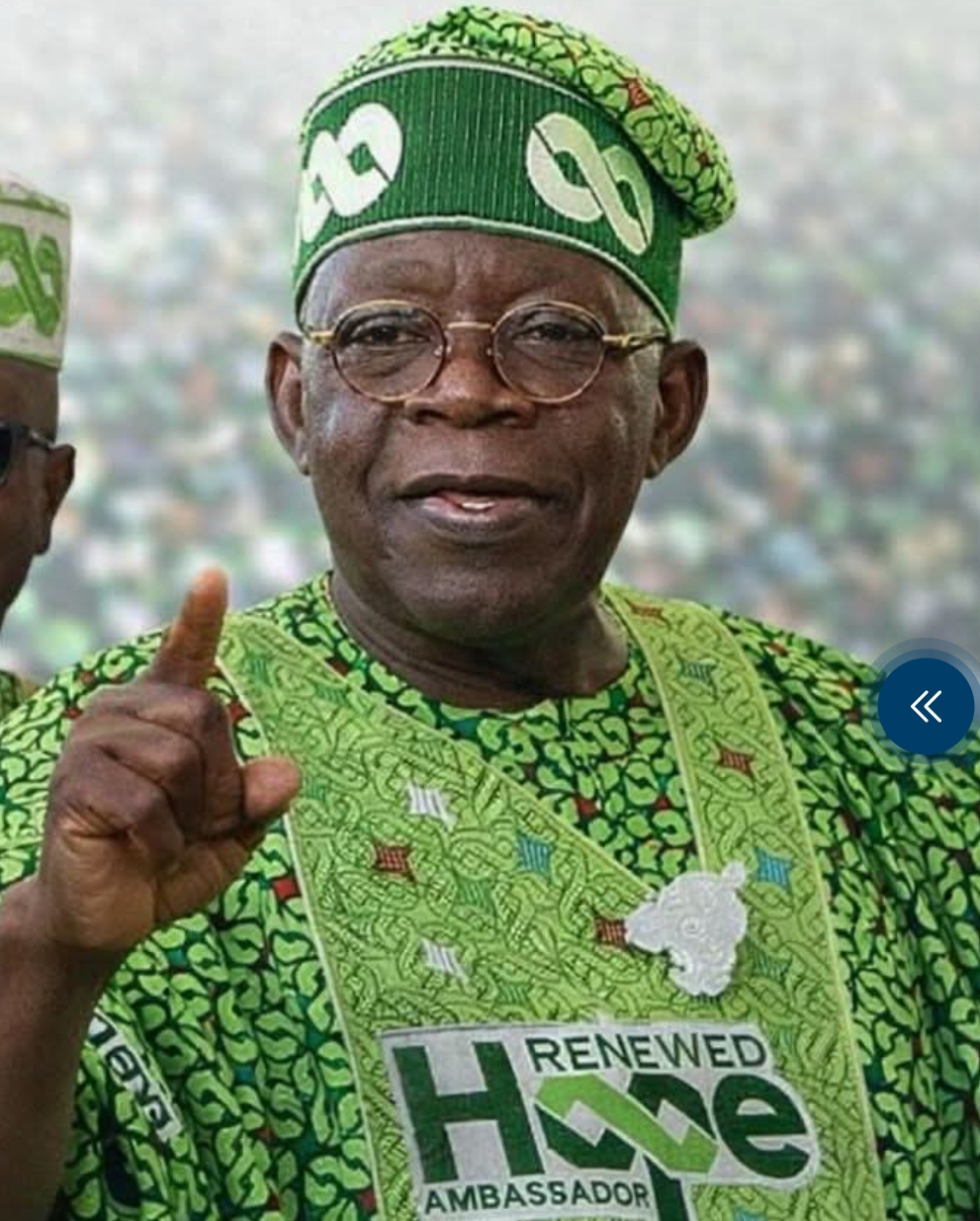
Picture: President Bola Ahmed Tinubu
By Akpekwu Imbufe, Southsouth Bureau Chief
Continued from last Post
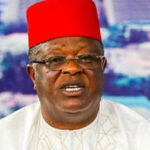
For avoidance of doubts, we are living in the cusp of war and war is eminently upon us than is expected. Umahi’s coastal highway guards does not fit into contemporary security architecture and should be discarded and permanently done away with. It has no special role as the country already has an established federal highway police known to exercised effective highway patrols until potholes from neglected old roads and lack of new roads construction happened to them to go extinct. The Senate cannot step down national guards bill on concerns of overlapping duties only for the Ministry of Works to introduce the very thing that forced the Senate to suspend the national guards bill. This is the contradictions.
The security situation in the country is not about the politicization and multiplication of security services in the guise of fighting insecurity. It is a deliberate inoculation of antidotes of doses of the right type of policies on the polity. Fighting insecurity is like fighting COVID or cancer and it begins by understanding the root cause of the disease, its global implications, geopolitics and economics. Nigeria’s security problems are political, Geopolitics and economics.
The root cause of insecurity in the country is not borne out of moral decadence. The root cause of insecurity in the country is that the society has outgrown policy makers, who invariably has gotten lost in the web of inattention to small details. The country has little or no investment in security architecture. By security architecture, it is meant, the art or science or practice of designing and building security structures, especially ones identified as veritable in defense of the security of the country. The country has none. Policy construction in Nigeria is not borne from a conscious act or a unifying, coherent form or structure. If it were, security agencies and policy makers would not be at each other’s throat as it is now. Compartmentalized units of security apparatuses would act as conjoined twins contemporaneously. Policy makers would not outsource security infrastructure but develop indigenous technologies to combat insecurity.
It is in Geopolitics that the failure of Nigerian security system is exposed the most and ineffective. The reason is carelessness and over comfort from the benefits, the plum of office afforded policy formulators to live the life of affluence. How else can they be so inattentive to the happenings around the country? In the West Africa sub region, where the country is domino, there are foments in Burkina Faso and Niger republics that needn’t be treated lightly, security wise. In North Africa, South Sudan, Sudan and Somalia have been going through civil crisis, which invariably means, a threat to Nigeria’s security and now the crisis in the Middle East which to this moment, the country’s stand on the war is not known. Having no official position on the crisis in Israel, Iran, Yemen and Lebanon equally means having no security plans if things don’t add in the end.
The lack of understanding of Geopolitics is behind Umahi’s contraption of the coastal highway guards to police coastal roads and the senate’s stepping down of the national coastal guard against the prevailing insecurity in the world. If the Strait of Hormuz and the Red Sea became untenable, other sea routes through the southern tip of Africa and the Gulf of Guinea would affect Nigeria’s security wise. Militarily, insecurity in other places in the world should be a concern to the Federal Government.

In the interim, the country does not have what it takes to endure the heavy weight of the type of insecurity going on in countries aforementioned when seen that Nigeria has a total geographical land mass of approximately 923,768 to 923,769 square kilometers, (356,668 to 356,669 square miles). This makes the country the 14th largest country in Africa and most vulnerable. A breakdown is 910,770 sq. km of landed area and 13,000 sq. km of water area.
In the coastal areas, even as there is no exact official number for how many creeks are in Nigeria. The coastline features an extensive, complex, and constantly shifting network of winding saline creeks, distributaries, and intertidal mangrove swamps—particularly across the Niger Delta region, making it impossible to police. Any security budget that factored the Niger Delta region into Nigeria’s security architecture cannot be in akara or moi moi outlook like Umahi’s coastal highway guards. The Minister of Works is out of his depth on this aspect.
Nonetheless, the Lagos-Calabar Coastal Highway is approximately 1100km kilometers across nine states and given the scope of the coastal highway guards, the devil in the details is that Tinubu’s coastal highway has not met the mark it was set to achieved. And thinking in Geopolitics with developments in the world, the question again can be asked: how well is Nigeria prepared to secure its large landmass and the people? This is where Umahi’s expertise can be useful for example, if all the coastal bridges linking Nigeria’s coastal highway are bombed, can Umahi’s Ministry of Works provide alternative bridges in twenty four hours to return connectivity for users of coastal highway? This is the question begging answers from the Senator-Governor-Minister of Works.
It is intriguing that the roles of Umahi’s coastal highway guards is reporting suspicious activities such as loitering, sleeping, and hawking along coastal corridors. These roles are borne out of economic insecurity in the country. The question is, why would Nigerians loiter, sleep and hawks on coastal highways? Though, the former Senator-Governor now Minister of Works did not provide the answers, we don’t need a soothsayer’s answer to help here. The answer is simply unemployment. Nigerians loiter because they don’t have anything to engage them. They sleep on the streets because they are homeless and Nigerians hawks because they need to eek a living and here the Minister without a thought floated a coastal highway guards to criminalized the people for the failures of government! This is where Umahi’s coastal highway guards system is a contradiction with policy orientation and the Minister must be told that he is in total disconnect with the r ealities on grounds. If he must execute the coastal highway guards system, he must do so in tandem with the felt needs of the people.
The Minister of Works should better think of providing jobs, housing and micro credits for Nigerians to get engaged in commercial activities than policing the highways. He may begin by developing Sea Ports in synergies with relevant ministries to see how to capture shipping enterprises as global sea route is shifting from the Suze Canal, the Red Sea and Indian Ocean to the Gulf of Guinea. Nigeria is a powerful player in the gulf of Guinea and Umahi is better placed to lead the charge at policy level. Akpekwu Imbufe is also the author of Laurels of Lucre: Battle for Power, Money and Sex. Published on Amazon Platforms and Kindle Unlimited. End.