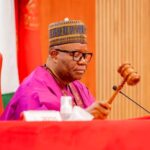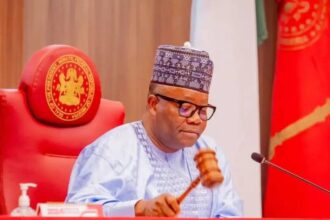
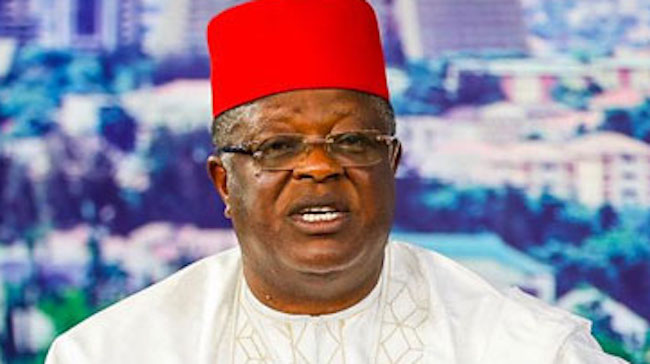
Picture: Umahi
By Akpekwu Imbufe, Southsouth Bureau Chief
Not long, the Minister of Works, David Umahi, inaugurated a Coastal Highway Guards with the mandate to protect the Lagos-Calabar Coastal Highway from vandalism and to control illegal roadside trading, unauthorized motorcycle and tricycle operations operating on the road, (as per when the coastal highway becomes operational?) it remains a question.
Already, the ministry has deployed 40 officers under the leadership of retired General Adekunle Shodunke, whose task is to coordinate the coastal highway guards in direct collaboration with security agencies. What this means is that the coastal highway guards is a full-time national security infrastructure protection agency, with powers, according to the ministry, to track, patrol and monitor government roads assets, as well as reporting suspicious activities such as loitering, sleeping, and hawking along coastal corridors. When enforced, the coastal highway guards would find, enforcing restrictions against commercial motorcycles (okada) and tricycles (keke) on the highway is not needed as most states in southern Nigeria has banned motorcycle and tricycles operators on the highway.
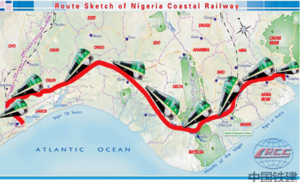
Lagos-Calabar coastal highway
On a Facebook page, Umahi was quoted as saying “The presence of the coastal guards on the highway is to reassure motorists and to not frighten them. Their responsibility will include, among other things, maintaining presence along the designated sections of the highway and maintaining alert of activities capable of threatening the safety of road users or government infrastructure. They are expected to observe, remain vigilant, identify hazards, monitor government infrastructure, report vandalism and suspicious activities, assist motorists appropriately, report incidents and emergencies, communicate accurately, maintain proper records, and support authorized security and emergency agencies;
“They will protect the integrity of their assigned areas. They are the eyes and ears of the highway, and they will observe any damage to the infrastructure and report it to the appropriate authorities. We have motorcycles that they will be using to patrol the entire coastal area for now. To our host community, I want to appeal to you to please regard these personnel as partners.”
Umahi’s coastal highway guards, as a policy, lost sight of coastal corridors as veritable to the Nigerian socioeconomic and political trajectory in contemporary world, much with asymmetric and unmanned warfare, challenging security architecture of nations. As a concept, Umahi’s coastal highway guards falls far too short of modern security surveillance models and if flight of fancy is discountenanced, a surprise that even in the face of developments in the field, the ministry stills think of coastal security as that of tracking, patrolling, monitoring of government roads assets and report suspicious activities or damage, preventing unauthorized loitering, sleeping, and hawking along the coastal corridors, enforcement of restrictions against commercial motorcycles (okada) and tricycles (keke) on the highway and assist motorists during emergencies and among others.
This is far fetched. It is even a wonder that the bill on National Guard has been stepped down over what the Senate called “Wider consultations” because, “Lawmakers raised concerns that the new civilian-focused maritime agency might duplicate the security functions of the Nigerian Navy and the Marine Police and so, what is Umahi doing with coastal highway guards?”
Perhaps, the expressed concerns is not that the new civilian-focused maritime agency might duplicate the security functions of the Nigerian Navy and the Marine Police but that there is a policy disconnect between David Umahi’s Coastal Highway Guards and contradictions between Nigerian Navy and Ministry of Marine and Blue Economy, which strongly backs the establishment of the national coastal guard, whereas the Nigerian Navy opposes it due to anticipated role overlaps and governance costs.
While the contradictions are yet unresolved, the Federal Ministry of Works went on to separately launched a dedicated 40-member “Coastal Highway Guards” unit to protect the Lagos-Calabar Coastal Highway from vandalism. The Understanding here is that the new surveillance initiative maybe legally distinct from the stalled National Coast Guard, a proposal that is bugged down by legislative ambiguity.
It is trite to say that, policy makers entrusted with the security of the country thinks in archaic terms, when they forced the Senate Committee on Marine Transport and the sponsor of national guard bill, Senator Wasiu Eshilokun to revise the bill to frame the Coast Guard as a specialized civil maritime service and not a military branch, limiting its scope to commercial shipping, safety, and waterways, when security in today’s world has gone beyond policing. Boko Haram has gone nuclear, using sophisticated technologies and weapons of asymmetric war in the country. ISIS, ISWP and kidnappers uses drones technology and real time maneuverability and Umahi’s coastal highway guards is one equipped for tracking, patrolling, monitoring of government roads assets and report suspicious activities or damage, preventing unauthorized loitering, sleeping, and hawking along the coastal corridors with equipped motorcycles?
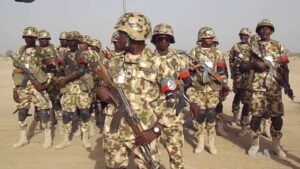
Perhaps yet, it is this kind of reasoning that is responsible for why the Nigerian security architectures have failed to confront effete bandits operating in the country, why the Nigerian Army fights asymmetric war with conventional tactics and why the society is militarized with hunters offering services to flush bandits operating in the country, while the military cannot. Part II Continued on next post