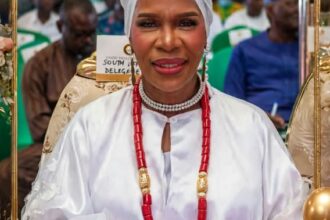
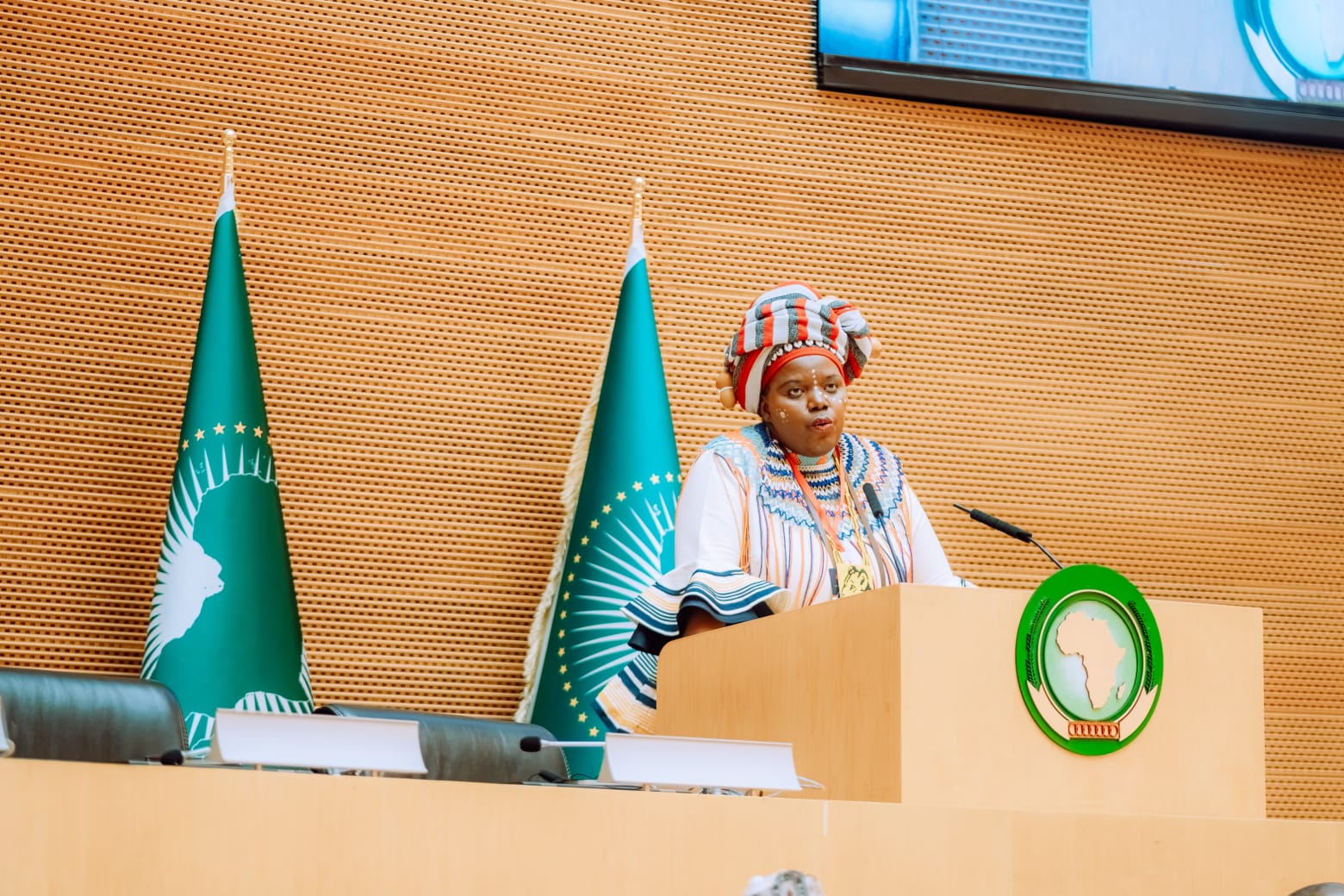
Picture: Princess Dr. Nikiwe Bam,
Edited by Blue Economy Magazine
Addis Ababa, Ethiopia – Princess Dr. Nikiwe Bam, Coordinator of the Africa Traditional Leaders Forum (ATLF) and Special Envoy of the Africa Blue Economy Roundtable (ABER) on African Traditional Institutions and the African Diaspora, has called on all African Union (AU) Member States to formally recognise and institutionalise traditional leadership within their national governance frameworks.
The call follows the historic Africa Celebrates Traditional Leaders Forum, held on 13 November 2026 at the African Union Headquarters in Addis Ababa, Ethiopia, which brought together Their Majesties, Royal Highnesses, Sultans, Kings, Queens and Indigenous Leaders from across the continent.
Princess Dr. Bam emphasised that traditional leaders remain an integral part of Africa’s governance systems, cultural identity, peacebuilding structures and community development. She urged African governments to move beyond acknowledging traditional leaders during cultural celebrations and establish meaningful legal and institutional frameworks that recognise their status, authority and contributions to national and continental development.

She highlighted that traditional leaders are custodians of indigenous knowledge systems, ancestral heritage, cultural values and community-based governance. Their contributions to conflict resolution, social cohesion, environmental protection, local economic development and preservation of African identity must be recognised and strengthened.
Establishing a Unified Continental Voice
A major achievement emerging from the Addis Ababa gathering was the formation of the African Traditional Leaders Council (ATLC) — a significant step towards strengthening cooperation, unity and collective representation among traditional leadership institutions across Africa.
The establishment of the Council provides an opportunity for traditional leaders from different countries and kingdoms to speak with a unified continental voice, strengthen relationships among traditional institutions and engage national governments and the African Union on matters affecting indigenous communities.

Princess Dr. Bam described the initiative as an important milestone in repositioning traditional leadership within Africa’s development and governance architecture.
She stressed that the Council should serve as a platform for constructive engagement with governments, the African Union and regional institutions, particularly on peacebuilding, cultural preservation, indigenous knowledge systems, economic development and protection of Africa’s heritage.
A Call to African Governments and the African Union
Princess Dr. Bam called for stronger collaboration between the African Union, national governments, regional bodies and traditional leadership institutions to develop a continental framework for formal recognition, protection and meaningful participation of traditional leaders.

She emphasised the need for AU Member States to review national policies and legislation to ensure traditional institutions are appropriately recognised and supported, taking into account the constitutional and legal frameworks of individual countries.
She stated:
“Africa cannot fully realise its aspirations for unity, peace and sustainable development while its traditional leadership institutions remain inadequately recognised in many countries. Traditional leaders must have a recognised place in Africa’s governance and development architecture.”
She further noted that Africa’s development must be rooted in its own identity, history, knowledge systems and institutions. Traditional leadership should therefore be viewed not simply as a cultural inheritance, but as a valuable partner in addressing contemporary challenges facing African societies.
Repositioning Traditional Leadership for Africa’s Future

The Africa Celebrates Traditional Leaders Forum represents an important platform for advancing dialogue, solidarity and cooperation among African traditional institutions.
Through the Africa Traditional Leaders Forum and the newly established African Traditional Leaders Council, Princess Dr. Bam seeks to advance a continental vision in which traditional leaders are respected, recognised and actively involved in shaping policies and initiatives that affect their communities.
The initiative also seeks to strengthen the relationship between traditional leadership and modern governance, ensuring that Africa’s indigenous institutions contribute meaningfully to the African Union’s aspirations for peace, integration, prosperity and sustainable development.
The message from Addis Ababa is clear: Traditional leadership is not merely a symbol of Africa’s past; it is an important institution for shaping Africa’s future.
The time has come for African governments and the African Union to recognise traditional leadership as an essential partner in building a united, peaceful and prosperous Africa.