Edited by Blue Economy Magazine
The Urban-Rural Environmental Defenders (U-RED) has cautioned that the Nigeria-Morocco Gas Pipeline (NMGP), which traverses communities across West Africa and beyond, must not be characterized by systemic environmental injustice and neglect of frontline communities.
In a statement signed by its Executive Director, God’spower Martins, titled ‘What is the True Cost of the Nigeria-Morocco Gas Pipeline?’ the group called on the Federal Government to conduct a thorough and transparent Environmental Impact Assessment (EIA) to ensure hitch-free execution of the project.
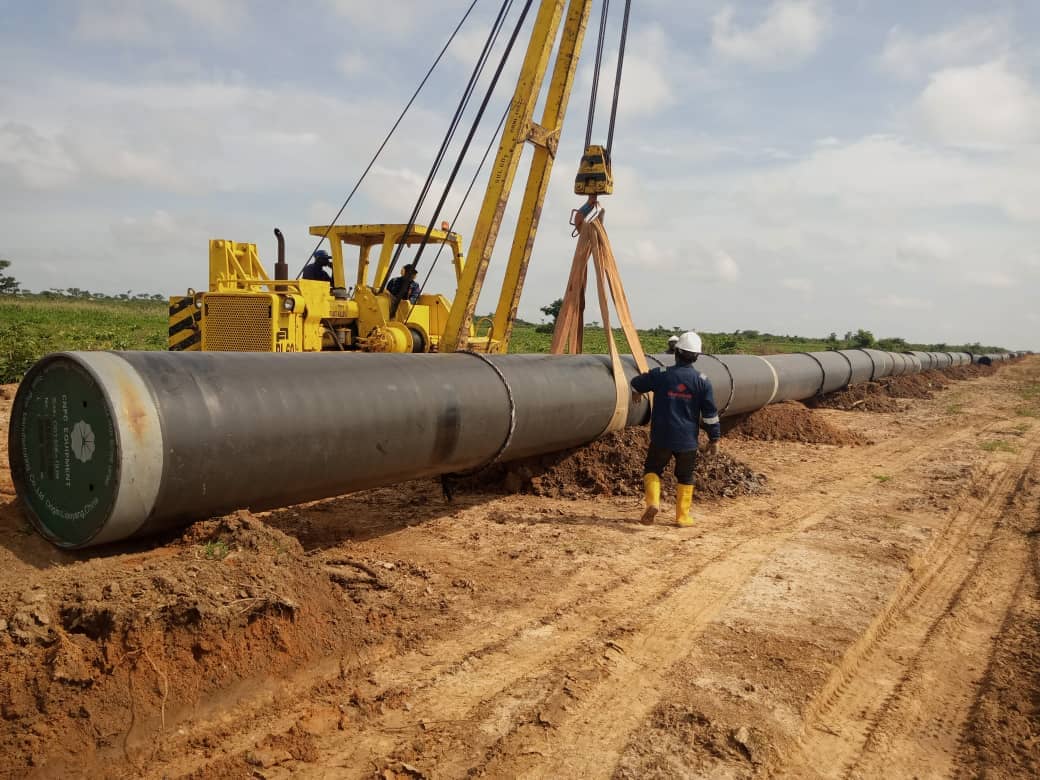
According to U-RED, “When governments talk about the NMGP, they point to a project stretching about 6,000 kilometres, costing up to $27 billion, and promising to move 30 billion cubic meters of gas annually for economic gain.

But behind this, a simple truth is buried: the multi-billion-dollar project is designed to ship our natural resources to light up European homes and power foreign industries, while everyday West Africans are left to bear the true costs – environmental and social damage.
Nigeria remains one of the largest gas exporters on the continent, yet more than half of our own people do not have reliable electricity. In neighbouring countries connected to the existing West Africa Gas Pipeline (WAGP), the story is just as bad.”
The group noted that local artisans, small business owners, and urban and rural families will not get power from this project. Instead, coastal communities will bear the brunt of environmental, social and economic risks while multinational companies and political elites share the profits.
“We cannot destroy our own backyard and ruin our people’s lives just to satisfy Europe’s energy demand and make energy cheaper and more available in Europe,” the statement read.
U-RED stressed that the physical cost to host communities is devastating, as the planned route cuts directly through fragile coastal areas and riverine lands. Places across the Niger Delta such as Bonny Island, Ogoni, Oloibiri and other extraction points will suffer further damage.
“In the coastal corridors of Lagos, Ondo and Ogun States, families will face land grabs, pollution of vital fishing grounds, destruction of mangrove swamps and disturbance of sacred ancestral sites.
For fishers and smallholder farmers who rely on these waters and lands to feed their families, loss of their environment means immediate joblessness, poverty and hunger, with no safety net or fair compensation in sight. This is the true cost of the NMGP, not the billions of dollars to be spent,” it stated.
The group insisted that systemic injustice must not define the project. Decision-makers must treat host communities with respect and ensure transparency – not behind closed doors in wealthy offices, but through community dialogues that disclose safety risks, environmental reports, compensation frameworks and protection/redress mechanisms for land and livelihood claims.
“Local farmers, fishers and residents should not be ignored. They should not be treated as bystanders but as fundamental right-holders to Free, Prior and Informed Consent (FPIC) – the right to say yes or no to projects that threaten their survival.”
U-RED further warned that concerns must not be met with pressure and intimidation, noting that community members who speak up are often harassed, surveilled or branded as anti-development.
“You cannot build an energy project of this magnitude by bullying communities and taking away their livelihoods. When people are pushed to the wall, stripped of their land and forced to watch their environments destroyed for profit they do not benefit from, deep anger and resentment inevitably build up.”

“U-RED strongly advocates that the NMGP must not ignore local rights and rely on force, which will only trigger agitations, conflict, restiveness and instability across the region.
It is time to stop prioritizing corporate profit over environmental sustainability and human lives. If we truly want a fair future, governments and developers of the NMGP must put people before profit, respect local consent and deliberately choose not to harm frontline communities for commercial interest,” the statement concluded.