
Edited by Blue Economy
ABUJA, Nigeria — The Provisionary Committee for the Establishment of the Nigerian Coast Guard (PC-NCG) has described the argument that a Nigerian Coast Guard would impose an additional financial burden on the Federal Government as inconsistent with the realities of Nigeria’s current maritime governance structure.
In a statement signed by the Director of Communication and Public Affairs, Dr. Piriye Kiyaramo, on behalf of the Chief Executive and Accounting Officer, Captain Noah Ichaba, PC-NCG said the opposite is true.
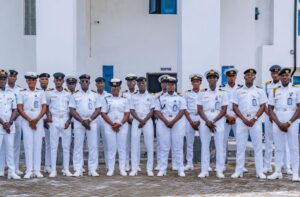
“Nigeria has been paying for Coast Guard functions for decades, but through a fragmented system of multiple institutions, overlapping mandates, and duplicated expenditures,” the statement said.
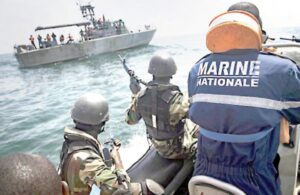
PC-NCG noted that critical maritime functions including maritime law enforcement, search and rescue, coastal surveillance, marine environmental protection, fisheries enforcement, port security, anti-smuggling operations, immigration control at sea, and protection of critical maritime infrastructure are currently dispersed across numerous agencies.
“Each agency receives separate budgetary allocations, maintains separate command structures, procures separate equipment, trains separate personnel, and operates independent administrative systems, all while performing only fragments of what is internationally recognized as Coast Guard responsibilities.
“The issue, therefore, is not whether Nigeria can afford a Coast Guard,” the statement said. “The issue is whether Nigeria can afford to continue paying for Coast Guard functions inefficiently.”
The Committee observed that agencies such as the Nigerian Navy, NIMASA, the Marine Police, the Nigeria Customs Service, the Nigeria Immigration Service, the Nigerian Ports Authority, and several others continue to expend substantial public funds on overlapping maritime responsibilities.

In addition, the Federal Government spends billions of naira annually on private maritime security and surveillance contracts to bridge institutional gaps that a properly established Nigerian Coast Guard would ordinarily address as part of its statutory mandate.
“Taken together, the cumulative annual expenditure on these overlapping functions and outsourced security arrangements is more than sufficient to finance the establishment and sustainable operation of a Nigerian Coast Guard,” PC-NCG stated.
“In fact, the amount currently spent in a single year could comfortably fund the Coast Guard’s operational and institutional requirements for three to four years, while delivering greater coordination, accountability, efficiency, and value for public resources.”

Rather than constituting an additional financial burden, PC-NCG said a Nigerian Coast Guard would transform existing expenditure into a strategic national investment by eliminating duplication and waste, generating revenue through its statutory functions, creating employment opportunities, strengthening the Blue Economy, improving maritime governance and enhancing national security.
“The issue is not the availability of funding, but the efficient organization of existing expenditure,” the statement added. “Establishing a Nigerian Coast Guard would consolidate these expenditures into a single, dedicated institution, ensuring greater efficiency and better value for every naira spent on maritime security and safety.”
PC-NCG concluded that the Nigerian Coast Guard does not necessarily require new money. “It requires the reorganization and rationalization of money already being spent. This fragmented arrangement is not cost-effective. It duplicates expenditure, weakens accountability, encourages inter-agency rivalry, and reduces operational efficiency.”
“The real question, therefore, is not whether Nigeria can afford to establish a Coast Guard. The real question is whether Nigeria can continue to justify spending public funds on a fragmented system that costs more, achieves less, and leaves critical gaps in maritime governance.”