*Title: Lost in Biafra, © 1999. *Author: Akpekwu Imbufe. *Number of Pages: 500. *Word count: 208,000. *Date of Publication: Unpublished. *Genre: Historical Fiction.
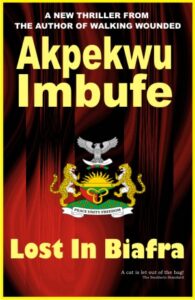
By Akpekwu Imbufe, Bureau Chief, Southsouth
Lost in Biafra is the story of how Eastern Nigerian politicians who lost out in the commanding height of the Nigerian economy plotted to benefit from the secession of Biafra, but lost as they were defeated and forced to accept armistice by the Nigerian side.
Akpekwu Imbufe’s book is a historical fiction on the Nigeria Civil War, (1967-1970). Set in five parts, Prologue, four books and an epilogue, one can’t help but accept that the author is aware of the uproar the book will generate when confronted with alternative narratives to the undying wounds in the Nigerian-Biafran narrative.
The thinking, chooses the style in which the construct of the book was written and it will anger those who holds the grudge of wounded pride that Biafra was a necessity of last resort. This wounded pride is the reason why most commentators including works done by actors who took part in the civil war are left with ‘potholes’ and ‘sinkholes’. Lost in Biafra fills the missing gaps with convincing talking points.
The style is an effective way of addressing apostasy that would put off genuine readers from reading an engaging and thought provoking tale with intriguing characters like the ones in Lost in Biafra. The Writer is not superfluous but, draws readers to his talking points, the likes that would force a rewrite and revisions of text books on the Biafran war.
The book’s comical depiction of General Dumogwu Obidiekwu, the alter ego of General Emeka Odumegwu-Ojukwu, Head of State of Biafra as he took to self exile with his personal belongings including books and kitchen utensils, as well as General Yarbubaka Galathimari the alter ego of General Yakubu Gowon’s soldiers fighting the war with charms and talismans evokes memories of how both sides thought of the crisis.
Imbufe also provides a hint to the narrative of the unsolved six decades cases of abandoned children and persons said to be missing even when after the war ended. Hear the author: “The night Ogbuitogori was relieved of his life, his youngest son Ogbui, was wrapped in warm cloths and sent to a widow who lost her only son in the Biafran war;” The audacity of this claim states that missing children were provided fostered homes by communities where they were abandoned. Again the author said:“Families that were almost erased in the war and on the verge of going extinct simply restock their households with abandoned children.
The author also balanced the argument for those who may criticize the claim by the question, ‘what happened to adults declared as missing?’ in the narrative, he answered thus: ‘Behind the reason no one seems to recognize Adah, who was pregnant was that none wanted to add a new responsibility of additional mouth to feed coming from war with nothing to fall back to…’ Some families simply denied claims of kinship with missing persons that found their way home asking for proof of paternity. Others said to be missing are those who simply refused to go back to the world they new before the war, as the new world was better than the old.
As a journalist writing in the landscape that shaped the civil war, I can’t help but accept that the author is correct in his assessment and the book’s title aptly resonate with children fostered from abandoned stock as utterly lost! His take: “Orlu was given two small strokes of marks on both cheeks and Nzeh, two dashed marks on his cheeks as well. It held no meaning except to erase their identities and tribesmen were forbidden to talk about them.” I have encountered abandoned children who were used to restock diminishing lineage on the line of duty as a journalist and confirm this is a valid revelation.
Nonetheless, the book placed high stakes on narratives that would be hard to substantiate, even as it is often touted, all is fair in war. The low side of the narrative is that, which the author submitted that they may have been no war, if the counter coup of 1967 had killed General Chukwuemeka Odumegwu Ojukwu in the east as they did other military officers in the west. This is advocacy for violent change of government and must not be applauded. A system should adjust itself through conversation and strategic thinking. This is my major disagreement with the author. The second disagreement is that, the author left the issue of cannibalism open ended. We need to be open. Did the Biafrans resorted to cannibalism following the use of hunger by the Nigerian side as a weapon of war? The world is still waiting for the revelation as no Biafran hero is willing to accept.
There is also a subtle hint by the author though muted that the Biafran war was fought alongside other wars raging in the region. This is a true assessment of situations in the region. Eastern Nigeria is a motley crowd of strife even today, more or less atomistic. “Biafra is a field of rivalry. Everyone is on each others throat over victuals, money and love.” Perhaps, this was why Ojukwu had Ifejuna, Banjo and Others shot hot by firing squad, creating the distrust that broke Biafra apart.
Overall, Lost in Biafra is a provocative book set to enflamed the political landscape of Nigeria as all known narratives about the Nigerian-Biafra war have been thrown away with the bathwater. The book is a journey of individual ambitions, fears and failures and how these were falsely extrapolated to mean ethnic and national interests on both sides.
I strongly recommend this book to students of literature, history and social sciences in Nigeria and on the civil war. Let the truth be told, not since the works of Chinua Achebe and Ngugi wa Thiong’ o had a book like this, seized my imagination in the African literally landscape. The book confronts the same landscape with invectives, mind-blowing truths, and entertainment for readers to take to bed.